
TIG Welding for Beginners: Try This Test!
I'd Hire You If You Can Pass This TIG Welding Test
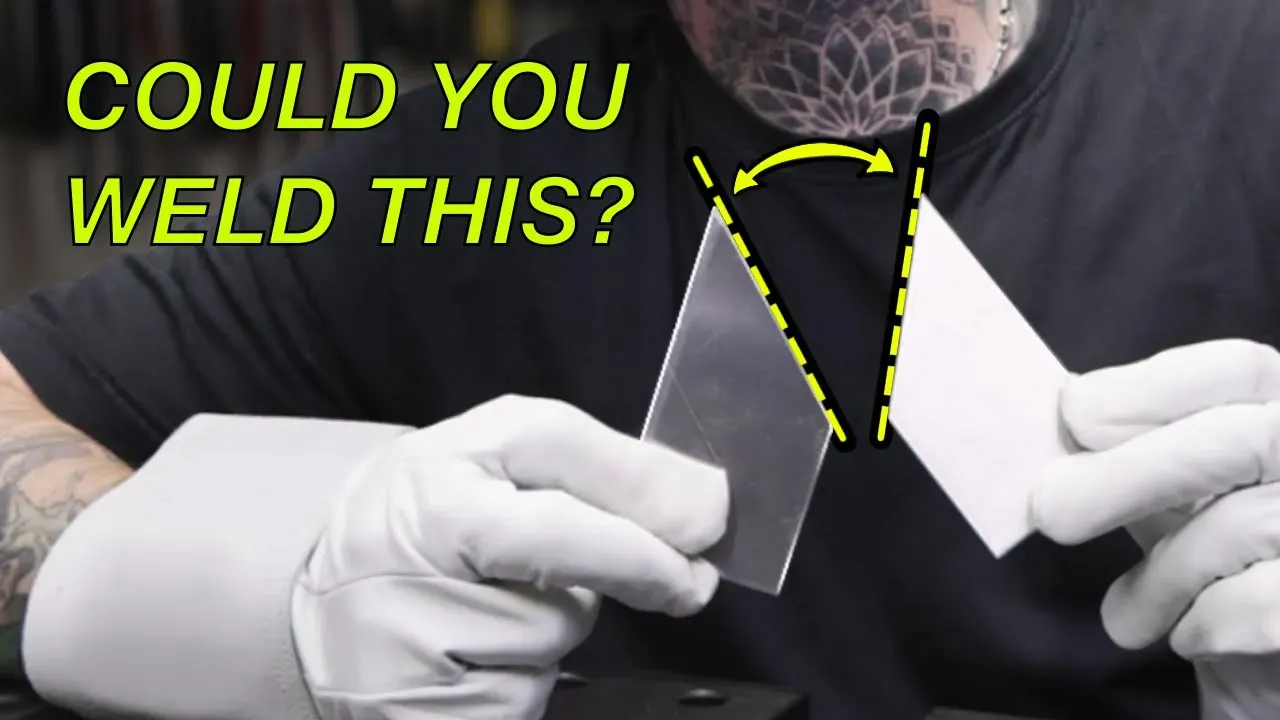
A clean bead doesn't impress me much if the joint is easy. This TIG welding test exposes control, planning, heat management, and how well you handle bad angles.
Most people never see a setup like this in school, yet it feels a lot closer to real shop work. If I saw you weld this piece properly, I'd pay attention fast. The reason isn't the shape alone, it's how the joint forces you to think before you strike an arc.
Why this joint exposes mistakes so fast
This test piece is a mix of outside corner welding and fillet joints, but the hard part isn't the puddle itself. The hard part is the angles, the restricted access, and the fact that every pass could go in more than one direction. On some sides, the torch gets crowded. On other sides, the filler rod wants to bump into the work. That means you can't rely on one comfortable hand position and repeat it over and over.
Because there are so many ways to travel, this joint overwhelms people fast. I can watch a pass start out clean, then fall apart near the end because the welder picked a direction that trapped them in a hot, cramped spot. That is why this piece exposes even good-looking welds. A person may have nice beads on simple coupons, yet this project shows weak heat control and limited out-of-position experience right away.
When I use this as a test, I'm not looking for flashy beads. I'm looking for control when the joint stops being comfortable.
How I build the pyramid test piece
The build is simple. I cut a bunch of triangles on the band saw, tack those triangles into small pyramid shapes, then tack the pyramid shapes together into one part. It doesn't take exotic tooling, which is part of why I like it so much. The project is easy to make, but hard to finish well.
Tacking is fairly direct, although tack placement matters more than most people expect. A tack in the wrong spot can block access later, force an ugly finish button into view, or make it harder to connect a final pass cleanly. So before I tack anything, I think about where I want the welds to begin, where I want them to end, and which areas I may want to hide under later passes.
That early planning changes the whole project. It gives me cleaner access, better symmetry, and fewer surprises when the part starts holding heat.
The prep and practice that fix beginner problems
Before I tack a single piece, I clean everything well. I like acetone for decontamination, then I wire brush hard. The brushing is about more than looks. It removes contamination, helps the material weld more predictably, and gives me a cleaner start when I'm trying to keep the final piece consistent.
I even use a ruler while brushing so the prep lines stay straight and organized. That sounds small, but it pays off. When the base prep looks sharp, the finished project looks sharper too.
At the beginner stage, I usually see the same problems again and again:
- A pass starts clean, then gets rough at the end.
- Small holes or gaps show up where passes fail to connect.
- Too many travel options lead to overheating and poor heat control.
If you're in that stage, I don't see it as a dead end. This joint exposes awkward torch control, restricted filler access, and lack of out-of-position practice. That's all. When TIG stops being fun on a project like this, I go back to basic joints and warm up there. I also prop those joints up on the table at odd angles so I can simulate the off-position feel without fighting a complex part at the same time.
Where intermediate welders still get trapped
Once skill starts to improve, the straight passes usually look much better. You can see more control, steadier rhythm, and cleaner bead shape. Still, one detail is often missing, and that detail is planning.
With this many possible directions, it's easy to box yourself into a place where you can't see clearly or feed filler the way you want. Then the piece gets hotter, and every bad choice becomes harder to recover from. That problem shows up in any position. Flat, tilted, or rotated, the joint punishes poor sequence.
The torch and filler angles I want to see
I want the filler fed in line with the welding pass. I also want the filler somewhere around 90 degrees to the torch angle. Those two details matter a lot on a project like this because the access is tight and the path keeps changing. When the filler drifts out of line, the pass gets less controlled and the whole joint gets harder to read.
What a hire-worthy result looks like
When I study a finished piece at the high end, the first thing I notice is symmetry. The finish buttons are planned, centered, and repeated with purpose. I want one on each face, then a centered button in the middle that ties the whole part together cleanly. When those marks land in random spots, the project looks random. When they land in planned spots, the whole piece looks intentional.
I also pay close attention to weld direction. If I can point a weld so the button lands where it won't damage another pass, I'll do it. If I can run one weld first and let later welds cover that finish mark, I'll do that too. Flipping direction at the right time is one of the easiest ways to hide a mark and clean up the final look.
This is where my years in production, custom work, and teaching show up the most. I choose my full sequence before I strike an arc. I don't want to trap myself in a tight corner, leave a button where it draws the eye, or overheat an area I've already finished. Most of all, I want every pass connected and every corner wrapped cleanly.
That level of work comes down to consistency. The pass at the start needs to match the pass at the end. The corners need to look tied together. The whole part needs to read as one planned piece, not a collection of separate welds. When I weld at that level, I spend less time fixing and more time finishing.
Final thoughts
If you can weld this test piece well, I'm seeing more than bead appearance. I'm seeing planning, angle control, heat awareness, and the ability to stay calm when the joint stops helping you.
That is what separates a decent result from a polished one. Fill and chill, and do a random act of kindness for a stranger today.
- Dusty 🤘🏻
Download your exclusive Beginner's Guide to Aluminum TIG Welding!
Enter your information below to receive exclusive PDF mini-textbook straight to your email.
We hate SPAM. We will never sell your information, for any reason.
