
How to Get Awesome Results When TIG Welding Aluminum
How to Get Awesome Results When TIG Welding Aluminum
If TIG welding aluminum feels like it goes from “this is going well” to “what the *$@# just happened” in a second, you’re not imagining it. Aluminum reacts fast and it doesn’t forgive hesitation.
Getting good at aluminum TIG welding comes down to one thing: control.
That means controlling heat for the thickness you’re welding, feeding filler at the right time, and training your hands and eyes to stay calm as the part heats up. The fastest way to build that skill isn’t guessing on real jobs, it’s practicing on purpose, with purpose, in stages, and only moving on to harder or trickier welds when you’re ready.
Start Where Control Is Easiest: Flat Plate
The best place to build aluminum TIG control is flat plate. No joint. No edges. Just a clean piece of aluminum and a single bead.
This setup removes distractions and lets you focus on the two things that matter most: heat input and filler timing. When nothing else is fighting you, mistakes become obvious and progress happens faster.
Running beads on flat plate might feel boring, but that’s exactly why it works. You’re isolating the core skill instead of surviving a joint.
Your first goal is matching heat to material thickness. Aluminum tells you quickly if you’re off. Too cold and the puddle won’t flow. Too hot and it spreads wide and sloppy. On flat plate, you can watch how small pedal changes affect puddle size without also tracking a seam.
Filler Control Is Heat Control
Filler rod isn’t just there to add metal. It’s one of your main heat control tools.
If you don’t add enough filler, the base metal keeps soaking up heat and the puddle grows. If you add too much, the bead stacks up and stops blending into the plate.
The goal is balance. Add filler that matches the heat you’re putting in. When the timing clicks, the bead becomes consistent and repeatable instead of random and haphazard.
After each pass, look at the weld like a report card. The bead should look even from start to finish, with steady cleaning action and no sudden changes in width.
Consistency Is the First Win
What you’re really chasing early on isn’t perfection, it’s consistency.
That means the bead looks the same at the end as it did at the start. Same width. Same pattern. Same feel. When your flat plate welds stop changing their mind halfway through, you know your control is improving.
Move to a Joint Without Changing the Rules
Once flat plate feels under control, step up to a real joint. This is where pressure increases, but the rules stay the same.
Good heat, matched with the right amount of filler.
The difference now is steering. If you already know what a good puddle looks like from flat plate practice, you’re not guessing anymore, you know you'll be guiding it along the seam.
If the material allows, look for a clean line of penetration on the back side. That’s a strong sign heat and filler are working together.
Hold your joint welds to the same standard as your plate welds. Messy joints usually mean rushing or reacting instead of controlling.
Build Real-World Control With Scrap Shapes
When joints feel consistent, it’s time to make things awkward on purpose.
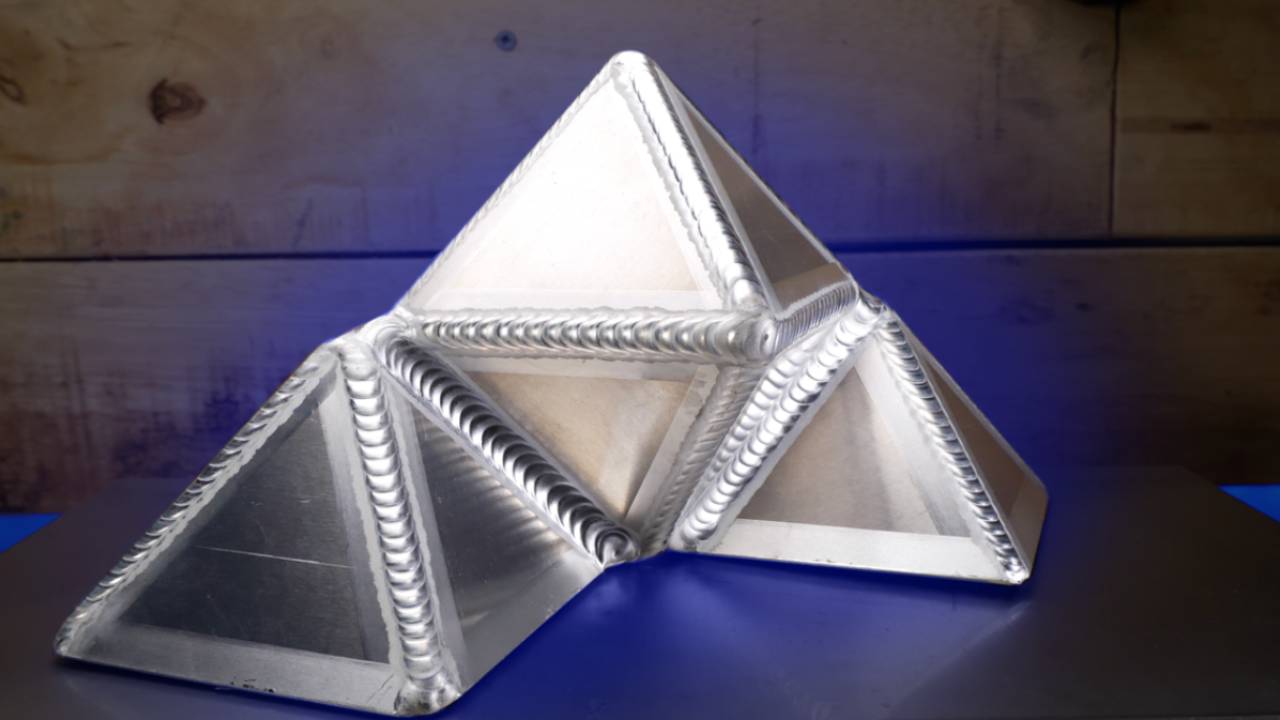
Scrap triangles and random shapes are one of the fastest ways to build real-world aluminum TIG control. Nothing sits flat. Torch angles change. Visibility gets worse. Tricky factors that are part of real jobs.
Start simple, then increase complexity as your control improves. The goal isn’t pretty setups. It’s staying consistent when conditions aren’t perfect.
This kind of practice forces better planning, better body position, and calmer heat control.
Keep the Rules Simple and Repeat Them
No matter what you’re welding, the foundation stays the same:
-
Heat matched to material thickness
-
Filler added to balance that heat
-
Consistent results from start to finish
If you build skill in stages and repeat the basics on purpose, aluminum TIG welding stops feeling chaotic and starts feeling predictable.
Final Thoughts
Getting really good at TIG welding aluminum isn’t about special "tricks" or "secret settings". It’s about control, practiced the right way. Start on flat plate, move to joints, then challenge yourself with awkward scrap. Keep the standards the same at every stage.
If you want to see these techniques broken down visually, check out the IG Reel linked from this post, then give it a go yourself!
View The Instagram Reel Here 🎥
- Dusty
Download your exclusive Beginner's Guide to Aluminum TIG Welding!
Enter your information below to receive exclusive PDF mini-textbook straight to your email.
We hate SPAM. We will never sell your information, for any reason.
