
How To Improve Your Welds: Break The Pattern
Every TIG welder hits this stage eventually: your welds start looking pretty good, your beads are consistent, and you're feeling confident...and then almost out of nowhere, your progress just stalls. You're putting in the time, running the same drills, doing the same practice joints, but nothing seems to be improving. The frustrating truth? That plateau isn't a sign that you're doing something wrong. It's actually a sign that you've been doing the same thing too well for too long.
Same hand. Same motion. Same repetition.
Your brain has gotten comfortable, and comfort, while useful as it is in the real world, is the enemy of growth in the welding booth.
Below is a technique that will feel completely wrong the first time you try it. But stick with it! Because this is the pattern-breaker that most instructors never talk about.
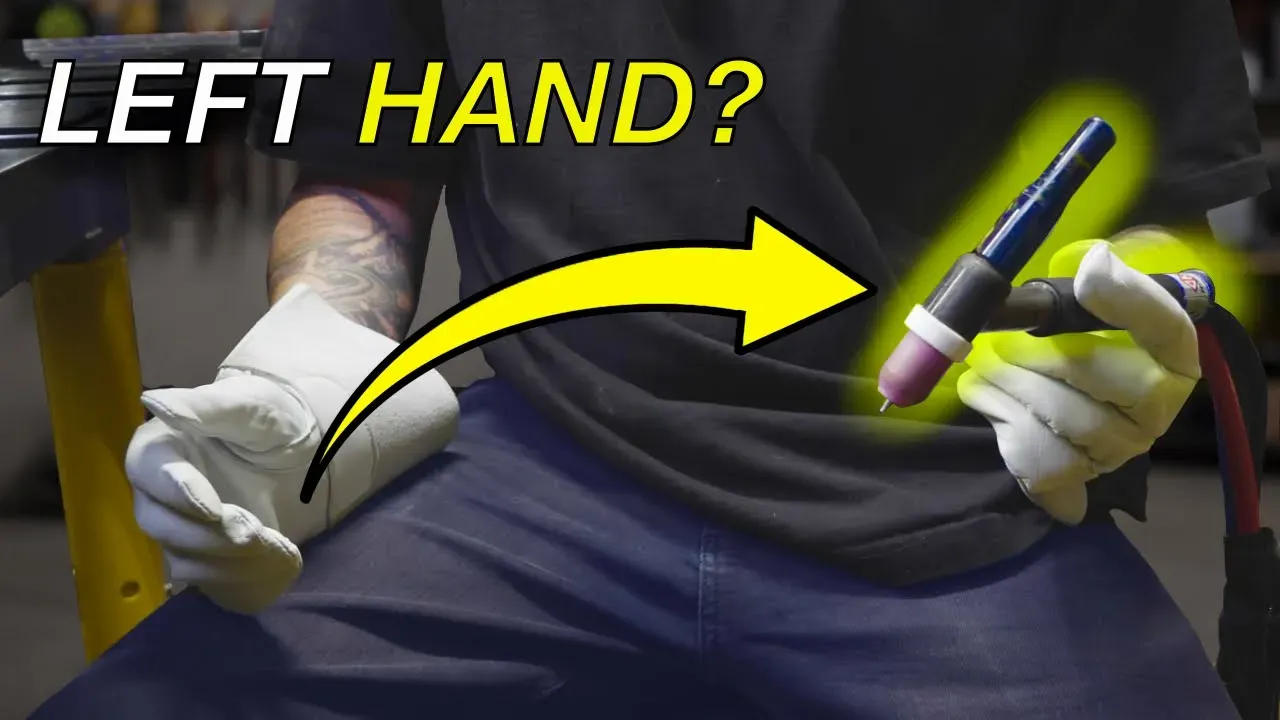
Switch to Your "Bad" Hand
It sounds simple, in fact it sounds almost too simple. But switching your torch to your non-dominant hand - your "bad" hand - is one of the most powerful training tools available to any TIG welder who's hit a wall.
If you're right-handed, put the torch in your left hand. Your filler rod goes in your right. Everything you've practiced gets flipped, mirrored, and suddenly strange again.
For the first few seconds, it's going to feel like you've never welded a day in your life. That's exactly the point.
What happens when you work with your non-dominant hand is that your brain is forced to slow down. It can no longer coast on muscle memory. Instead, it has to hyper-focus on the small details: the exact placement of your arc, the precise moment you add filler to the puddle, your travel speed & your hand-eye coordination. Every single element of your technique gets pulled back into conscious awareness.
This is where the magic lives.
What to Focus On While You're Struggling
Don't try to make perfect welds during this exercise. That's not the goal. The goal is to force your brain into a state of deep, deliberate attention. Here's what to zero in on:
Arc placement. With your bad hand shaking and unsure, you'll find yourself staring at exactly where your arc is landing. Good. That precision matters every single time you weld, dominant hand or not.
The filler sweet spot. Getting the filler rod into the right part of the puddle at the right moment is a detail that often gets sloppy when things feel easy. With your bad hand in control, you'll feel every misplaced dab.
The start of each pass. This is one of the most overlooked parts of TIG welding. The way a weld starts determines how the rest of it goes every time. When you're working with your non-dominant hand, take a few extra seconds at the beginning of each pass to let the puddle settle, establish your heat, and make sure everything is dialed in before you start moving. Don't rush it! The start is the whole game.
Your setup and control. Dry arcs on the table before you even strike an arc are completely valid here. Get comfortable with the awkwardness before you introduce heat. Let your brain and hands get acquainted with the new configuration.
Now Switch Back
After a handful of passes (and honestly, for most people it only takes five or six before you start getting a feel for it) go back to your dominant hand.
The difference will be felt immediately.
What felt normal before now feels fluid, controlled & almost effortless. The movements are smoother. Your arc is steadier. Your filler placement is more precise. You've just spent a few minutes forcing your brain to pay attention to every detail, and now all of that focus transfers directly back to your dominant hand with full coordination restored.
This technique isn't just a one-time trick, either. It's something you can return to whenever you feel like your technique is getting sloppy or complacent. Drop back to your bad hand for a few passes, let your brain reset and refocus, then come back to your dominant side sharper than before.
The Takeaway
Progress in TIG welding isn't always about more repetition, sometimes it's about smarter repetition. When your brain goes on autopilot, your growth stops. Switching to your non-dominant hand forces it back online, sharpens your focus on the details that matter, and ultimately makes you better with your dominant hand than you were before.
It's going to feel wrong but do it anyway.
Download the free workbook at the link below to go deeper on puddle control, filler technique, and everything that makes a great weld start great.
— Dusty James
Download your exclusive Beginner's Guide to Aluminum TIG Welding!
Enter your information below to receive exclusive PDF mini-textbook straight to your email.
We hate SPAM. We will never sell your information, for any reason.
